Views: 167 Author: Site Editor Publish Time: 2026-05-01 Origin: Site


Nothing ruins a morning commute faster than sipping lukewarm coffee from a supposedly premium travel mug. You expect your hot drinks to stay hot and cold drinks to stay freezing. The difference between lasting temperature control and rapid heat loss lies entirely in the underlying engineering.
Understanding how a Vacuum Flask—originally known in scientific circles as the Dewar flask—works is critical for evaluating product quality. This highly engineered double-walled vessel halts thermal transfer through precise physical mechanisms. Knowing this thermal technology helps you prevent premature product failure. It also allows you to maximize your return on investment in both everyday routines and extreme industrial environments.
This guide breaks down the core physics behind thermal retention. We will explore material tear-downs and clarify distinct category differences. Finally, we provide a practical framework to help you shortlist the perfect thermal vessel for your specific demands.
The technology relies on a "bottle-within-a-bottle" vacuum layer that systematically blocks the three paths of heat transfer: conduction, convection, and radiation.
A high-quality stainless steel vacuum flask eliminates the implosion risks of traditional glass linings while offering decades of operational durability.
Understanding the structural difference between a standard "flask" and a "thermos" dictates performance in specific scenarios (portable hydration vs. long-term multi-serving storage).
The weakest link in any thermal vessel is the closure mechanism; evaluating seal integrity is just as important as the vacuum wall itself.
To grasp why your beverage stays hot, you must understand the "thermal shield" concept. Imagine a smaller container suspended completely inside a larger external container. Manufacturers permanently attach these two walls at the neck. They then evacuate the air from the interstitial space between them. This manufacturing process creates a partial vacuum. Heat energy requires a physical medium to travel efficiently. By removing the air molecules, engineers effectively trap the temperature inside the vessel.
Let us explore how this design deliberately defeats the three fundamental vectors of heat transfer.
Conduction: Direct heat transfer happens through physical contact. Think of a hot coffee cup warming your desk. The vacuum layer removes the physical medium between the inner and outer walls. Heat simply cannot bridge the empty void.
Convection: Air circulation actively steals heat or introduces it. Hot air rises and cool air rushes in to replace it. Tight-sealing stoppers block airflow at the container opening. This prevents external air currents from mixing with your beverage and accelerating temperature loss.
Radiation: All hot objects emit infrared thermal energy. To combat this, manufacturers apply reflective internal coatings. This coating acts like a mirror. It continuously bounces infrared heat back into the hot liquid. Conversely, it blocks external radiant heat from warming up cold liquids.
You must maintain realistic expectations regarding thermal retention. No commercial vacuum is entirely perfect. The inner and outer metal walls must eventually connect at the neck of the bottle. This connection point causes inevitable "thermal leakage." Heat slowly escapes through the structural collar over time. A well-built vessel typically keeps liquids hot for 6 to 12 hours. It can effectively maintain cold temperatures for up to 24 hours.
Scottish scientist James Dewar invented the original thermal vessel in 1892. A German glassblower later recognized its commercial potential. He trademarked the design under the name "Thermos" in 1904. Today, consumers use "thermos" as a genericized term for any insulated bottle. However, structural differences separate these products into distinct functional categories.
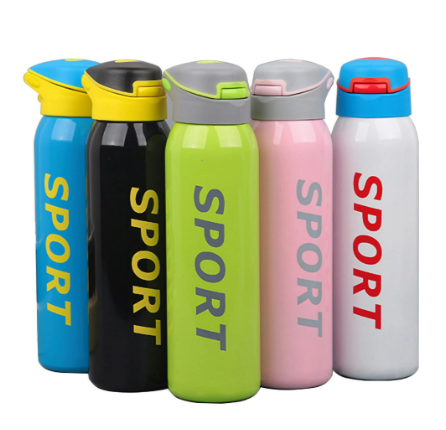
This category features a slimline profile and a direct-drink opening. Capacities typically range from 350ml to 600ml. These models prioritize portability and convenience. You can easily operate them with one hand while driving or walking. They fit snugly into standard vehicle cup holders or backpack sleeves. A modern bottle serves perfectly for a single daily commute or a quick gym session.
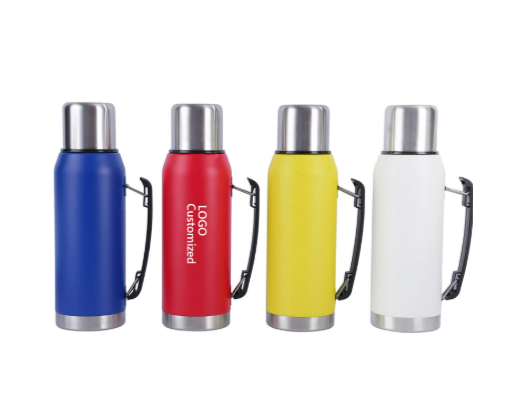
Traditional jugs feature massive capacities ranging from 750ml to over 1.5 liters. They boast heavy-duty, rugged construction. You usually get a cup-style outer lid and a narrower internal stopper. These heavy-duty models excel at multi-person sharing. They offer multi-day temperature retention for extreme environments. You will frequently see them used during remote camping trips or demanding industrial job sites.
Comparison Summary Chart
Feature Dimension | Modern Bottle Form | Traditional Jug Form |
|---|---|---|
Typical Capacity | 350ml – 600ml | 750ml – 1.5L+ |
Opening Style | Direct-drink, flip or screw cap | Narrow stopper, cup-style outer lid |
Primary Use Case | Portability, office commute, gym | Camping, industrial job sites, sharing |
Temperature Retention | Standard (6-12 hrs hot) | Extended (12-24+ hrs hot) |
Choosing the right construction material directly impacts longevity and safety. Early iterations of this technology relied heavily on glass inner walls. Glass liners provide excellent chemical inertness. They never absorb lingering coffee flavors or acidic juices. However, glass remains highly susceptible to shattering. A simple drop or sudden thermal shock from boiling water can instantly destroy a glass inner wall.
Because of these implosion risks, a high-quality Stainless steel vacuum flask represents the modern industry standard for durability. Premium food-grade stainless steel (often 18/8 grade) delivers unmatched impact resistance. It stays completely non-toxic and naturally BPA-free. This robust material easily handles the daily physical rigors of modern life.
The insulated wall only tells half the performance story. Nearly 90% of thermal loss occurs right at the neck and cap. You must deeply scrutinize the closure mechanism. High-grade silicone gaskets prevent warm air from leaking out. Deep thread patterns on the stopper ensure a secure, pressurized lock. A weak lid fundamentally compromises the best insulated body.
Mass-produced vessels sometimes suffer from hidden structural defects. Inferior welding along the bottom seam can gradually degrade over time. Compromised expansion joints fail to handle sudden internal temperature changes. These manufacturing flaws eventually cause a "lost vacuum." The protective void fills with ambient air. Once this happens, your premium vessel instantly devolves into an ordinary, uninsulated metal cup.
Best Practices for Evaluating Integrity
Inspect the seal: Remove the lid and check the silicone ring for tears, thin spots, or misalignments.
Check the base: Look for a reinforced or rubberized protective bottom to prevent hard impacts from damaging the internal weld.
Perform a touch test: We outline this exact diagnostic step in the FAQ section below to help you verify your product's health.
Navigating a saturated retail market requires a clear evaluation framework. You must align your final purchase with your actual daily routines. Do not buy a heavy camping jug for a simple train commute. Use the following scenario-based decision matrix to shortlist your ideal solution.
For the daily commuter: Prioritize a lightweight, portable design. Look for a one-handed, rapid-deploy lid. A guaranteed leak-proof lock is non-negotiable when throwing the bottle into a backpack alongside expensive electronics.
For outdoor and heavy-duty use: Select a model with double-gasket stoppers. Opt for a larger volumetric capacity. Larger volumes possess more thermal mass, which naturally reduces the temperature drop rate. Ensure the unit features a reinforced outer base to survive drops on hard surfaces.
For food and non-liquids: Divert your search to wide-mouth food jars. Narrow bottle necks trap thick food particles and become breeding grounds for bacteria. Wide-mouth jars ensure easy cleanability. They also prevent dangerous internal pressure buildup from steaming hot soups.
A true thermal isolation vessel represents a passive engineering marvel. It elegantly solves the fundamental physics of temperature degradation by eliminating the mediums heat needs to travel. Whether you need an industrial shield for deep-well drilling or a reliable travel mug for the office, the underlying thermal mechanics remain completely identical.
Your immediate next step is to audit your actual daily requirements. Honestly assess your required liquid volume, preferred transport method, and daily cleaning habits. Prioritize sturdy construction materials over mere aesthetic appeal or trendy colors. Look specifically for dual-wall stainless steel construction and premium silicone lid seals. Making an informed, structurally sound choice ensures you enjoy reliable temperature retention for years to come.
A: Generally not recommended unless explicitly designed for it. The trapped gas builds pressure inside the sealed chamber. This rising pressure can permanently damage the vacuum seal. In extreme cases, it can cause the lid to violently eject, posing a safety risk.
A: Fill the vessel completely with boiling water. Wait five minutes, then feel the outside exterior. If the outer steel feels hot to the touch, the internal vacuum seal has failed. Thermal conduction is occurring, meaning the vessel can no longer insulate. It must be replaced.
A: The empty space inside the vessel contains ambient air. This trapped air immediately absorbs heat from your hot liquid, cooling it down rapidly. For maximum thermal retention, you should always fill the vessel to its designated capacity line to minimize empty air volume.


