Views: 0 Author: Site Editor Publish Time: 2026-01-10 Origin: Site


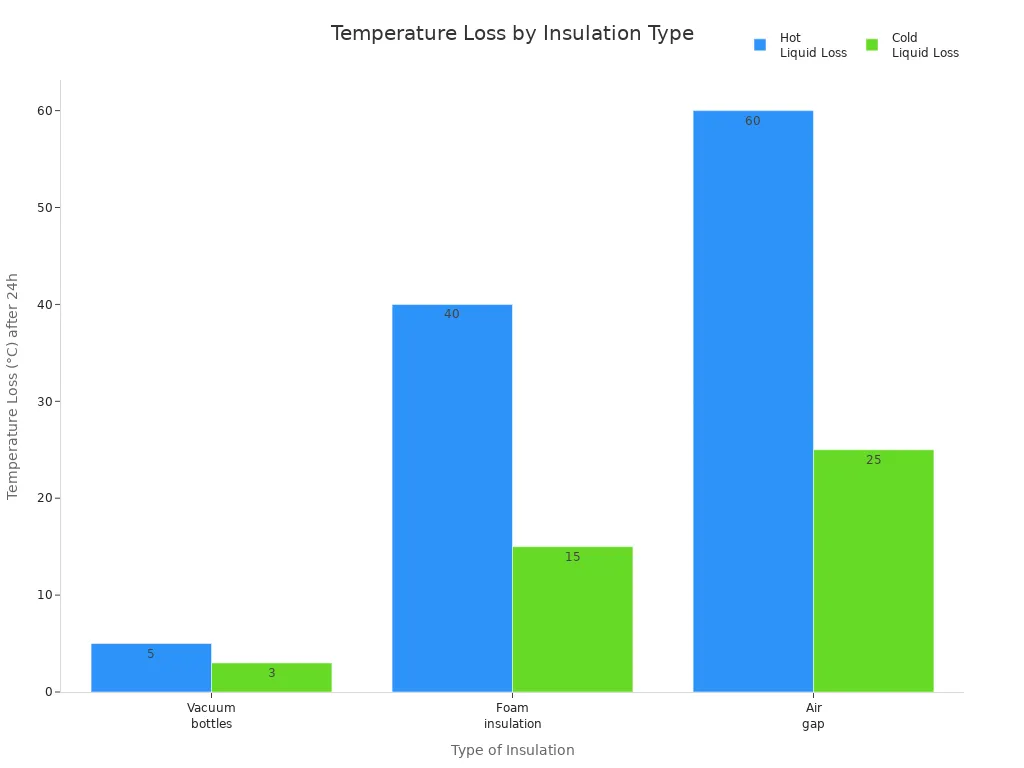
Type of Insulation | Temperature Loss after 24 hours |
|---|---|
Vacuum bottles | Loss of only 5°C (hot) / 3°C (cold) |
Foam insulation | Loss of 40°C (hot) / 15°C (cold) |
Air gap | Loss of 60°C (hot) / 25°C (cold) |
You save time because you do not need to reheat or chill your drink. A vacuum flask fits easily into your daily routine, making it a smart choice for school, work, or travel.
A vacuum flask keeps drinks hot or cold for a long time. It uses two walls with a vacuum between them. The vacuum stops heat from moving in or out.
Pick a vacuum flask made of stainless steel and BPA-free plastic. These materials are strong and safe. They are also good for the environment.
The tight seal on a vacuum flask is very important. It stops heat from escaping. This keeps your drinks at the right temperature longer.
Using a vacuum flask helps cut down on plastic waste. You can refill it instead of buying new bottles. This helps make the planet healthier.
Vacuum flasks can be used in many ways. You can use them for hot coffee, cold water, or meals. They are great for school, work, or outdoor trips.

You use a vacuum flask to keep your drinks hot or cold for hours. This container uses a special design to stop heat from moving in or out. The double-wall structure creates a space with no air, called a vacuum. This vacuum blocks most heat transfer. You can enjoy your favorite drink at the right temperature, even after a long day. Unlike regular bottles or tumblers, a vacuum flask uses this unique design to work much better. The vacuum-sealed gap between the walls is the key. Other containers often use air insulation or just a single wall, which does not keep drinks hot or cold as long. The lid on a vacuum flask also fits tightly, which helps keep the temperature steady.
A vacuum flask stands out because of its smart features. You will notice these main parts:
Double-wall construction: Two walls with a vacuum in between stop heat from moving.
Tight-fitting lid: The lid seals the flask and keeps air from getting in or out.
Durable materials: Most vacuum flasks use stainless steel for the body. This metal is strong, safe, and easy to recycle. Lids and seals often use BPA-free plastics like polypropylene or food-grade silicone. These materials keep your drinks safe and fresh.
Material Type | Description |
|---|---|
Stainless Steel | Commonly used for the body; durable, recyclable, and safe for health. |
BPA-free Plastics | Used for lids and seals; includes polypropylene (PP) and food-grade silicone. |
Tip: Choose a vacuum flask with stainless steel and BPA-free plastics for the best safety and durability.
You can rely on a vacuum flask for school, work, or outdoor trips. Its design and materials help you keep your drinks just the way you like them.

A vacuum flask looks like a regular bottle. But inside, it works differently. It has two walls, one inside the other. The space between these walls is empty. There is almost no air in this space. This empty space is called a vacuum.
The double-wall structure helps in these ways:
The vacuum stops heat from moving by conduction. Heat usually travels when molecules touch each other. But the vacuum has almost no molecules. So heat cannot move through it easily.
The vacuum also blocks heat from moving by convection. In normal bottles, air or liquid can move and carry heat away. In a vacuum, nothing moves. So convection cannot happen.
Here is a simple table that shows how the vacuum flask blocks different types of heat transfer:
Heat Transfer Type | How Vacuum Flask Reduces It |
|---|---|
Conduction | Very few air molecules to pass heat through. |
Convection | No air means no air currents to carry heat away. |
Radiation | Reflective inner coating (e.g., copper) bounces heat back. |
Vacuum insulation is the secret to keeping drinks hot or cold. When you use a flask with vacuum insulation, heat cannot escape or enter easily. The vacuum has no air or gas molecules. This makes it very hard for heat to move. So your hot drinks stay hot. Your cold drinks stay cold for much longer than in regular bottles.
Vacuum insulation works so well that it is used in advanced products. These include vacuum insulation panels and even space technology. These panels can cut heat loss by more than 70% compared to solid walls. The same idea helps your vacuum flask keep drinks at the right temperature for hours.
Tip: Vacuum insulation works better than foam or air insulation. You save energy and enjoy your drink just how you like it.
Inside a vacuum flask, there is a shiny layer. This reflective coating is often made of aluminum foil. It acts like a mirror for heat. It bounces heat back to your drink if it is hot. It reflects heat away if your drink is cold.
The reflective lining stops heat from escaping by radiation. Radiation is a way heat moves without air or touching.
High-quality flasks may use copper or silver coatings. These reflect even more heat.
The mirrored surface keeps heat inside. Your drink stays at the perfect temperature for hours.
Note: The reflective coating is a big reason why a vacuum flask works better than a regular bottle.
A tight seal is very important for a vacuum flask. The lid fits tightly. It often uses food-grade silicone or strong rubber for gaskets and O-rings. These materials are flexible and tough. They make sure no air gets in or out.
Here is how a tight seal helps:
It stops hot air and steam from escaping. This keeps heat from leaving your drink.
It keeps outside air from getting in. This stops cold drinks from warming up or hot drinks from cooling down.
Some lids have extra insulation. This blocks even more heat transfer.
Evidence | Explanation |
|---|---|
A tightly sealed lid is crucial to prevent heat loss. | It prevents hot air and steam from escaping, which would otherwise carry heat energy away from the liquid inside. |
Effective gaskets are essential for airtight seals. | Gaskets made of food-grade silicone enhance the seal, preventing heat loss through convection. |
Insulated lids provide additional barriers. | Some lids are designed to be insulated, further reducing convective heat loss. |
When you use a vacuum flask, all these features work together. The double-wall structure, vacuum insulation, reflective coating, and tight seal help keep your drinks at the temperature you want, for as long as you need.
You want your drink to stay hot or cold for hours. A vacuum flask makes this possible. It uses double-wall vacuum technology to keep drinks at the right temperature much longer than regular bottles.
You can keep your coffee hot for up to 12 hours or your water cold for up to 24 hours.
High-quality flasks can even keep water cold for 36 hours if you add ice and open the lid only a few times.
Regular insulated bottles may not work as well, especially during long trips or hikes.
Tip: If you need your drink to last all day, choose a vacuum flask over a single-wall or basic insulated bottle.
You need a bottle that can handle daily use. Most vacuum flasks use stainless steel, which is strong, resists rust, and does not react with your drinks. Some flasks use glass liners, but these can break if dropped. Metal flasks stand up better to bumps and falls.
Material | Properties and Benefits |
|---|---|
Durable, rust-resistant, easy to clean, keeps heat in, recyclable | |
Glass | Keeps flavors pure, eco-friendly, but breaks easily |
Plastic | Light, tough, BPA-free, but not as eco-friendly |
Silicone | Flexible, heat-safe, used for seals and grips, long-lasting |
You help the planet when you use a vacuum flask. You do not need to buy single-use plastic bottles. This choice cuts down on plastic waste and pollution.
You use your flask again and again, which supports recycling and a circular economy.
You lower your carbon footprint by avoiding disposable bottles.
Note: Every time you refill your flask, you help reduce plastic pollution.
A vacuum flask fits many parts of your life. You can use it at school, in the office, or outdoors.
Store hot drinks like coffee or tea, but avoid steeping tea too long.
Keep cold water or juice, but skip acidic drinks and milk to protect your health and your flask.
Some flasks work well for fitness, parenting, or travel.
Environment | Product | Features |
|---|---|---|
Outdoor | Kryo Flask | Keeps drinks hot or cold for hours, great for hiking |
Office | Therma Handy | Fits in bags, perfect for coffee or water at work |
Versatile | Therma Flask | Adapts to many uses, keeps drinks at the right temperature |
Remember: Always check which drinks are safe for your flask to keep it working well.
You can pick from many kinds of vacuum flasks. Some are good for daily use. Others work better for travel or sports. Here are the most popular choices:
Bottles: You see bottles everywhere. They keep drinks hot or cold for hours. Many people use bottles at school, work, or the gym. These flasks help you stay hydrated.
Travel Mugs: You grab travel mugs when you need a drink fast. Travel mugs fit in car cup holders and backpacks. Busy people use them for coffee or tea while commuting.
Vacuum flasks come in different materials and shapes. Each kind has special features for certain people. The table below shows which type fits your lifestyle:
Type of Vacuum Flask | Key Features | Ideal Users |
|---|---|---|
Durable, leak-proof, BPA-free, keeps drinks hot/cold | Commuters, students, athletes, outdoor adventurers | |
Glass | Pure taste, elegant, eco-friendly | Tea drinkers, coffee lovers, eco-conscious users |
Plastic | Lightweight, affordable, many designs | Budget shoppers, students, athletes |
Sports | Ergonomic, straw/spout, tough materials | Athletes, fitness fans, outdoor adventurers |
Mini and Travel | Small, portable, efficient insulation | Commuters, students, travelers |
Customizable | Personal designs, safe, durable | Gift buyers, event organizers, companies |
Tip: Pick a flask that fits your routine. Stainless steel is great for most people. Glass flasks give pure taste. Sports flasks are good for workouts.
You can use a vacuum flask in many ways each day. Here are some common uses:
Keep drinks hot or cold for hours
Bring soup or meals to school or work
Enjoy safe water during outdoor trips
Store leftovers or bulk food
Prepare for emergencies with safe food storage
Use as a hydration station at events
Cook simple foods like oatmeal or noodles
Reduce waste by skipping disposable bottles
Vacuum flasks help students, workers, and outdoor fans. You keep drinks at the right temperature. You also help the planet by using less plastic. You can trust your flask for commutes, travel, or family events. A vacuum flask makes life easier and greener.
You now know that a vacuum flask uses a double-wall design and a vacuum to stop heat from moving in or out. This smart construction keeps your drinks hot or cold for hours. Studies show that the materials and vacuum level make a big difference in how well your flask works. You save money over time because you do not need to buy new bottles often. Choose a vacuum flask to enjoy fresh drinks and help the planet every day.
You should rinse your flask with warm, soapy water after each use. For deep cleaning, use a mix of baking soda and water. Avoid using bleach or putting your flask in the dishwasher unless the manufacturer says it is safe.
You should avoid putting carbonated drinks in your vacuum flask. The pressure from the gas can build up and may cause leaks or damage the seal. Stick to still drinks for best results.
The vacuum seal may weaken if you drop your flask or if the lid does not close tightly. Check for dents or damaged seals. A broken vacuum means your flask cannot keep drinks hot or cold as long.
You can store milk or soup for a few hours, but do not leave them in the flask all day. Bacteria can grow if food stays warm for too long. Clean your flask well after storing these foods.


